Enterprise Big Data Strategy: A Mission-Critical Priority for CIOs
Enterprise Big Data Strategy is now a mission-critical priority for every CIO navigating digital transformation. As global organizations generate zettabytes of data, analytics has become the backbone of intelligent decision-making. In today’s volatile and unpredictable VUCA environment, intuition is no longer enough — only a strong Enterprise Big Data Strategy can drive clarity, agility, and competitive edge.
As analytics, AI, and automation reshape enterprise landscapes, the CIO’s role has evolved from technology custodian to transformation architect. Once focused on delivery and operations, CIOs today orchestrate innovation, lead cross-functional convergence, and build intelligence-led organizations. This evolution is grounded in the power of data — and the strategies designed to unlock its value.
Clarity on Business Outcomes
A robust Enterprise Big Data Strategy starts with clarity on business outcomes. Analytics without purpose becomes a technical exercise. CIOs must first define where data can deliver the highest impact — customer experience, cost optimization, revenue acceleration, risk management, or innovation. Aligning these priorities with organizational goals ensures that data investments generate measurable value.
Learn more about aligning BI-to-AI outcomes with business priorities:
https://www.rubiscape.com/platform/
Democratizing Data Across the Enterprise
Creating a data-driven enterprise means democratizing data. CIOs must empower frontline teams, analysts, and business users with advanced analytics platforms that allow them to explore data, build predictive models, visualize insights, and automate forecasts — without heavy IT dependency.
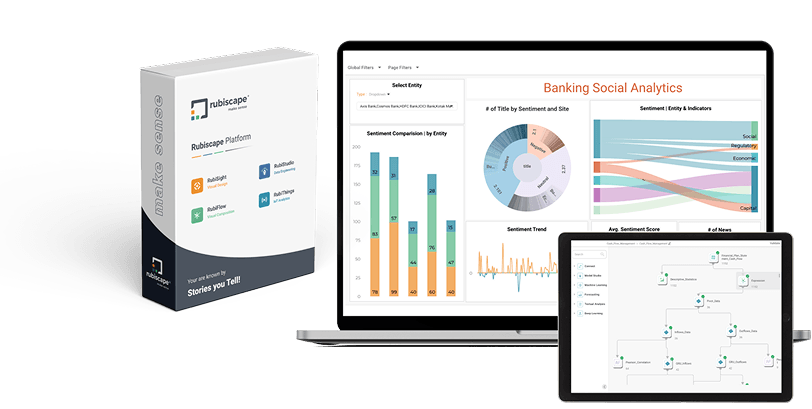
Platforms like Rubiscape enable business-led analytics through low-code tools, AutoML capabilities, and intelligent visualization layers that accelerate adoption.
Collaboration Between Business and Technology
A successful Enterprise Big Data Strategy also relies on collaboration. CIOs must bridge the gap between business and technology by integrating outcomes, tools, and data workflows. Business goals should guide platform selection, data governance, and architecture decisions. This ensures that analytics is not a siloed IT activity but an enterprise-wide capability.
To drive transformation at scale, CIOs must build support across departments. Technology choices must be evaluated not just on cost or architecture, but on their ability to drive business impact, improve decisions, and accelerate time-to-value. This includes assessing system compatibility, integration readiness, and vendor reliability.
External DoFollow reference on CIO strategy:
https://hbr.org/topic/cio