How Rubiscape is Powering Smarter Ports with Business Analytics & AI
In an era where global trade and logistics demand agility, the Ports & Maritime industry is embracing digital transformation to optimize operations, enhance decision-making, and


Databricks ISV Partner

Smarter Ports with Business Analytics & AI
GenAI Engine →
Data Visualization Studio →
Data Science Studio →
Data Engineering Studio →
Regulatory Engine →
IoT Analytics Engine →


Data-driven Business Innovation
RubiSight Mobile by Rubiscape
Discover how organizations are transforming data into game-changing results.
From ideas to outcomes, See how Rubiscape solves real-world challenges.
Quick, visual guides to help you explore features, workflows, and real-world use- cases.
Empower your team with enterprise-grade data science training through expert-led courses and real-world projects.
Empower academic institutions with AI/ML education through hands-on labs, structured curriculum, and industry-aligned programs.
Databricks ISV Partner
Smarter Ports with Business Analytics & AI
GenAI Engine →
Data Visualization Studio →
Data Science Studio →
Data Engineering Studio →
Regulatory Engine →
IoT Analytics Engine →
Data-driven Business Innovation
RubiSight Mobile by Rubiscape
Discover how organizations are transforming data into game-changing results.
From ideas to outcomes, See how Rubiscape solves real-world challenges.
Quick, visual guides to help you explore features, workflows, and real-world use- cases.
Empower your team with enterprise-grade data science training through expert-led courses and real-world projects.
Empower academic institutions with AI/ML education through hands-on labs, structured curriculum, and industry-aligned programs.
Databricks ISV Partner
Smarter Ports with Business Analytics & AI
GenAI Engine →
Data Visualization Studio →
Data Science Studio →
Data Engineering Studio →
Regulatory Engine →
IoT Analytics Engine →
Data-driven Business Innovation
RubiSight Mobile by Rubiscape
Discover how organizations are transforming data into game-changing results.
From ideas to outcomes, See how Rubiscape solves real-world challenges.
Quick, visual guides to help you explore features, workflows, and real-world use- cases.
Empower your team with enterprise-grade data science training through expert-led courses and real-world projects.
Empower academic institutions with AI/ML education through hands-on labs, structured curriculum, and industry-aligned programs.
Enterprise Big Data Strategy is now a mission-critical priority for every CIO navigating digital transformation. As global organizations generate zettabytes of data, analytics has become the backbone of intelligent decision-making. In today’s volatile and unpredictable VUCA environment, intuition is no longer enough — only a strong Enterprise Big Data Strategy can drive clarity, agility, and competitive edge.
As analytics, AI, and automation reshape enterprise landscapes, the CIO’s role has evolved from technology custodian to transformation architect. Once focused on delivery and operations, CIOs today orchestrate innovation, lead cross-functional convergence, and build intelligence-led organizations. This evolution is grounded in the power of data — and the strategies designed to unlock its value.
A robust Enterprise Big Data Strategy starts with clarity on business outcomes. Analytics without purpose becomes a technical exercise. CIOs must first define where data can deliver the highest impact — customer experience, cost optimization, revenue acceleration, risk management, or innovation. Aligning these priorities with organizational goals ensures that data investments generate measurable value.
Learn more about aligning BI-to-AI outcomes with business priorities: https://www.rubiscape.com/platform/
Creating a data-driven enterprise means democratizing data. CIOs must empower frontline teams, analysts, and business users with advanced analytics platforms that allow them to explore data, build predictive models, visualize insights, and automate forecasts — without heavy IT dependency.
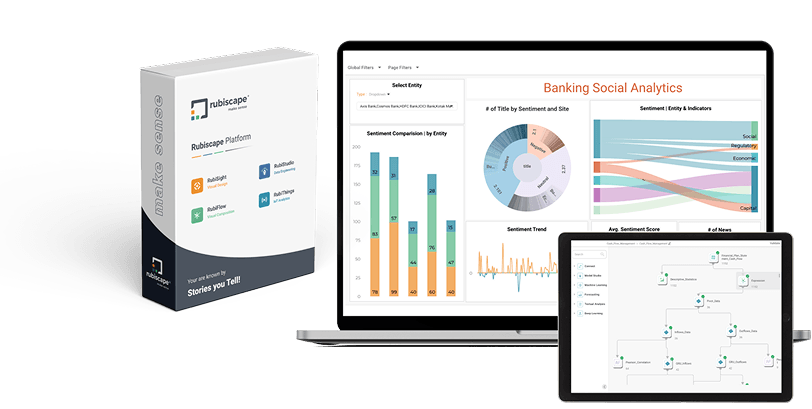
Platforms like Rubiscape enable business-led analytics through low-code tools, AutoML capabilities, and intelligent visualization layers that accelerate adoption.
A successful Enterprise Big Data Strategy also relies on collaboration. CIOs must bridge the gap between business and technology by integrating outcomes, tools, and data workflows. Business goals should guide platform selection, data governance, and architecture decisions. This ensures that analytics is not a siloed IT activity but an enterprise-wide capability.
To drive transformation at scale, CIOs must build support across departments. Technology choices must be evaluated not just on cost or architecture, but on their ability to drive business impact, improve decisions, and accelerate time-to-value. This includes assessing system compatibility, integration readiness, and vendor reliability.
External DoFollow reference on CIO strategy: https://hbr.org/topic/cio
In an era where global trade and logistics demand agility, the Ports & Maritime industry is embracing digital transformation to optimize operations, enhance decision-making, and
Building a High-Performance Workforce at Rubiscape The future of analytics is no longer just about algorithms, automation, or AI models — it’s about the people
As of 2020, GitHub and Google Trends rank Python as the most popular programming language, surpassing longstanding Java and JavaScript in popularity. Python is a
From BI to AI: How Rubiscape Turns Everyday Analytics into Decision-Ready Intelligence Most enterprises today are surrounded by data—but clarity often remains elusive. Dashboards exist.
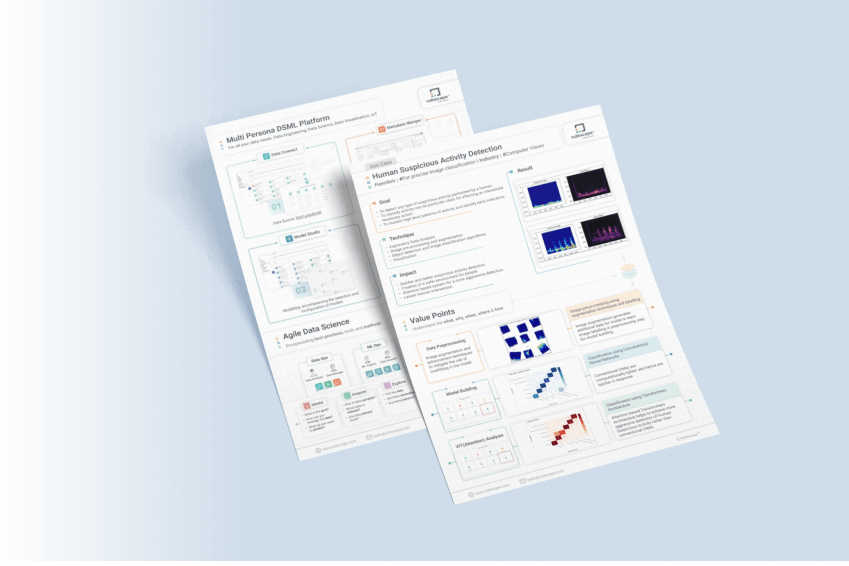
Technology capabilities form the core of a modern Enterprise Big Data Strategy. CIOs must choose platforms that support large-scale data processing, fast visualization, flexible pipelines, in-memory computation, and robust security. These capabilities empower non-technical business users to analyze complex datasets, generate insights, and drive real-time decision-making.
Internal link on Rubiscape capabilities: https://www.rubiscape.com/solutions/
Modern platforms must also offer extensions and accelerators — fraud detection, predictive intelligence, recommendation engines, demand forecasting — that allow faster implementation of data use cases. These accelerators shorten deployment cycles and reduce dependency on scarce data science talent.
An effective Enterprise Big Data Strategy must remain adaptable. As IoT, machine learning, and automation evolve, CIOs must ensure their data platforms support predictive modeling, sensor data management, M2M communication, and automated pipelines. The future belongs to enterprises that seamlessly converge data, AI, and automation into everyday workflows.
The CIO’s journey has transformed dramatically over the decades. From deploying systems to designing enterprise architectures, and now becoming value orchestrators, CIOs are central to business transformation. A well-designed Enterprise Big Data Strategy enables them to unify priorities, empower teams, and bridge the gap between technology potential and business outcomes.
At its core, a CIO’s mandate is to answer a timeless question: What should come first — the business opportunity or the technology opportunity? The answer lies in selecting a platform that acts as a universal intelligence layer — one that supports both, seamlessly.
We use cookies to improve your experience on our site. By using our site, you consent to cookies.
Manage your cookie preferences below:
Essential cookies enable basic functions and are necessary for the proper function of the website.
These cookies are needed for adding comments on this website.
Statistics cookies collect information anonymously. This information helps us understand how visitors use our website.
Google Analytics is a powerful tool that tracks and analyzes website traffic for informed marketing decisions.
Service URL: policies.google.com (opens in a new window)
Clarity is a web analytics service that tracks and reports website traffic.
Service URL: clarity.microsoft.com (opens in a new window)