Data Science in Government: Transforming Modern Governance
Data Science in Government has become a cornerstone of modern governance. As public sector institutions face growing complexity, scale, and rising citizen expectations, intuition-driven decision-making is no longer sufficient. Governments today must rely on analytics, machine learning, and AI to transform raw data into intelligence that drives policy design, execution, and performance evaluation.
From national security to healthcare and education, Data Science in Government is enabling public institutions to move from reactive governance to proactive, outcome-driven administration. By integrating data across departments and systems, governments can unlock insights that improve resource allocation, enhance transparency, and strengthen citizen trust.
Cybersecurity is one of the most critical areas where Data Science in Government delivers immediate value. Public sector systems store vast volumes of sensitive citizen and infrastructure data, making them prime targets for cyberattacks. With threats rising sharply worldwide, analytics-driven monitoring and predictive threat detection have become essential. Machine learning models analyze network traffic, user behavior, and device activity to detect anomalies in real time—helping governments prevent malware, ransomware, phishing, and IoT-based attacks before damage occurs.
External reference (DoFollow):
https://www.weforum.org/agenda/2023/01/government-cybersecurity-risk/
Tax evasion detection is another domain transformed by Data Science in Government. Manual scrutiny of financial data at national scale is impractical. Advanced analytics techniques such as graph analysis, forensic analytics, and predictive modeling enable tax authorities to correlate income declarations, transaction histories, and behavioral patterns. This allows early identification of suspicious activity, improved compliance, and significant recovery of lost public revenue.
Healthcare policymaking increasingly depends on Data Science in Government to deliver better outcomes at lower cost. Public health systems generate massive datasets spanning vaccinations, prescriptions, hospital visits, diagnostics, and surveillance. Analytics helps uncover critical patterns—such as correlations between preventive care and hospitalization rates—enabling policymakers to design targeted interventions. Predictive analytics also supports early disease outbreak detection, optimized resource allocation, and proactive public health responses.
Education is another highly data-intensive public sector domain where Data Science in Government drives measurable improvement. By analyzing student performance, attendance, and demographic trends, governments can identify learning gaps, detect at-risk students early, and assess the effectiveness of remedial programs—ensuring inclusive, accountable, and outcome-focused education systems.
Public safety and law enforcement are also being reshaped by Data Science in Government. Predictive analytics helps authorities identify crime hotspots, optimize patrol deployment, and enhance investigative outcomes. By shifting from reactive policing to predictive prevention, governments can safeguard communities more effectively while using public resources responsibly.
The way forward is clear. Data Science in Government is not merely a technology adoption—it represents a fundamental transformation in governance. When analytics is embedded across the entire policy lifecycle, governments become more agile, transparent, and accountable.
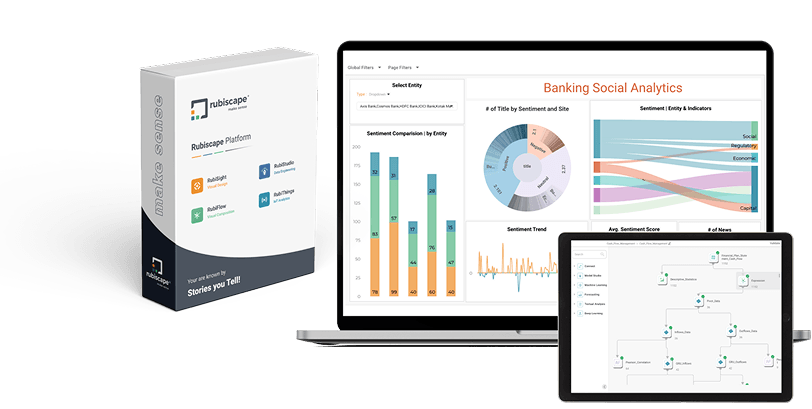
Rubiscape, a unified BI-to-AI analytics platform, empowers governments to integrate diverse data sources, accelerate decision-making, and convert insights into measurable public value—helping institutions truly Make Sense of Data.
https://www.rubiscape.com/platform/
https://www.rubiscape.com/solutions/