Data Science in Government: Transforming Modern Governance
Data Science in Government has become a defining force in modern governance.
As public sector institutions face growing complexity, data-driven decision-making
is no longer optional—it is foundational. From policy formulation to performance
evaluation, analytics, machine learning, and AI are enabling governments to improve
outcomes, optimize resources, and enhance citizen trust.
Across the globe, governments are increasingly relying on Data Science in Government
to move from intuition-led administration to evidence-based governance. By harnessing
data across departments and domains, public institutions can uncover actionable insights,
respond faster to emerging risks, and design policies that are both measurable and impactful.
Cybersecurity remains one of the most pressing challenges. With government databases
holding vast volumes of sensitive citizen and infrastructure data, the stakes are high.
According to industry reports, attacks on government systems surged sharply in recent years,
with a significant share targeting large democracies.
Data Science in Government enables real-time monitoring, anomaly detection, and predictive
threat intelligence by analyzing user behavior, network traffic, and device activity.
Advanced analytics helps governments proactively identify malware, ransomware, phishing,
and IoT-based threats—reducing response times and strengthening digital resilience.
External Reference (DoFollow):
https://www.weforum.org/agenda/2023/01/government-cybersecurity-risk/
Tax evasion detection is another critical application of Data Science in Government.
Manual scrutiny of financial data at national scale is impossible. Advanced analytics,
graph analysis, and predictive modeling now allow tax authorities to identify suspicious
patterns by correlating income declarations, transaction histories, and even publicly
available data.
Healthcare policy and planning also benefit enormously from Data Science in Government.
Public health systems generate vast datasets—from vaccination records and prescriptions
to hospital visits and lab results. Analytics enables governments to uncover patterns such
as correlations between vaccination coverage and hospitalization rates, enabling more
effective interventions.
Education is another highly data-intensive domain where Data Science in Government drives
measurable improvement. Governments can analyze student performance, teacher effectiveness,
and demographic trends to identify gaps in literacy, learning outcomes, and access.
Predictive models help identify at-risk students early and assess the impact of remedial
programs. By enabling transparent evaluation of educational initiatives, analytics
strengthens accountability and policy effectiveness.
Public safety and law enforcement increasingly rely on Data Science in Government to prevent
crime rather than simply react to it. Predictive analytics allows authorities to identify
crime hotspots, allocate patrol resources efficiently, and enhance investigative outcomes.
The way forward is clear. Data Science in Government is not just about technology adoption—it
is about transforming governance itself. When analytics is embedded into policy design,
execution, and evaluation, governments become more agile, transparent, and outcome-driven.
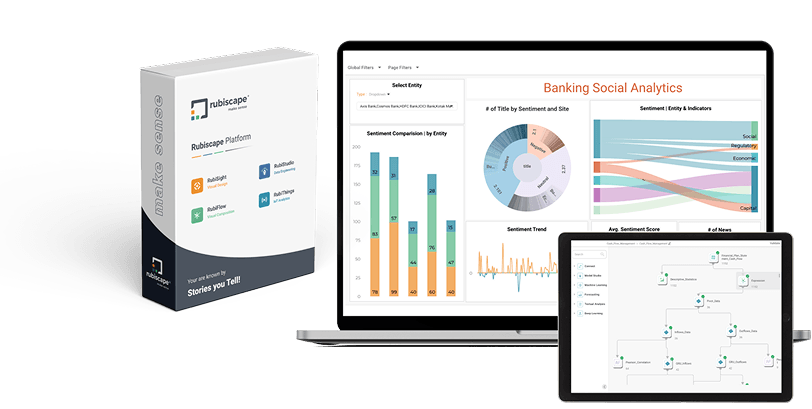
Rubiscape, a truly unified BI-to-AI data science platform, empowers governments to integrate
diverse data sources, accelerate decision-making, and convert insights into measurable
public value.
https://www.rubiscape.com/platform/
https://www.rubiscape.com/solutions/